Snack and spill buildup
Daily snacks, drinks and bodily fluids collect in play turf infill, feeding bacteria and staining fibers in the Houston heat.
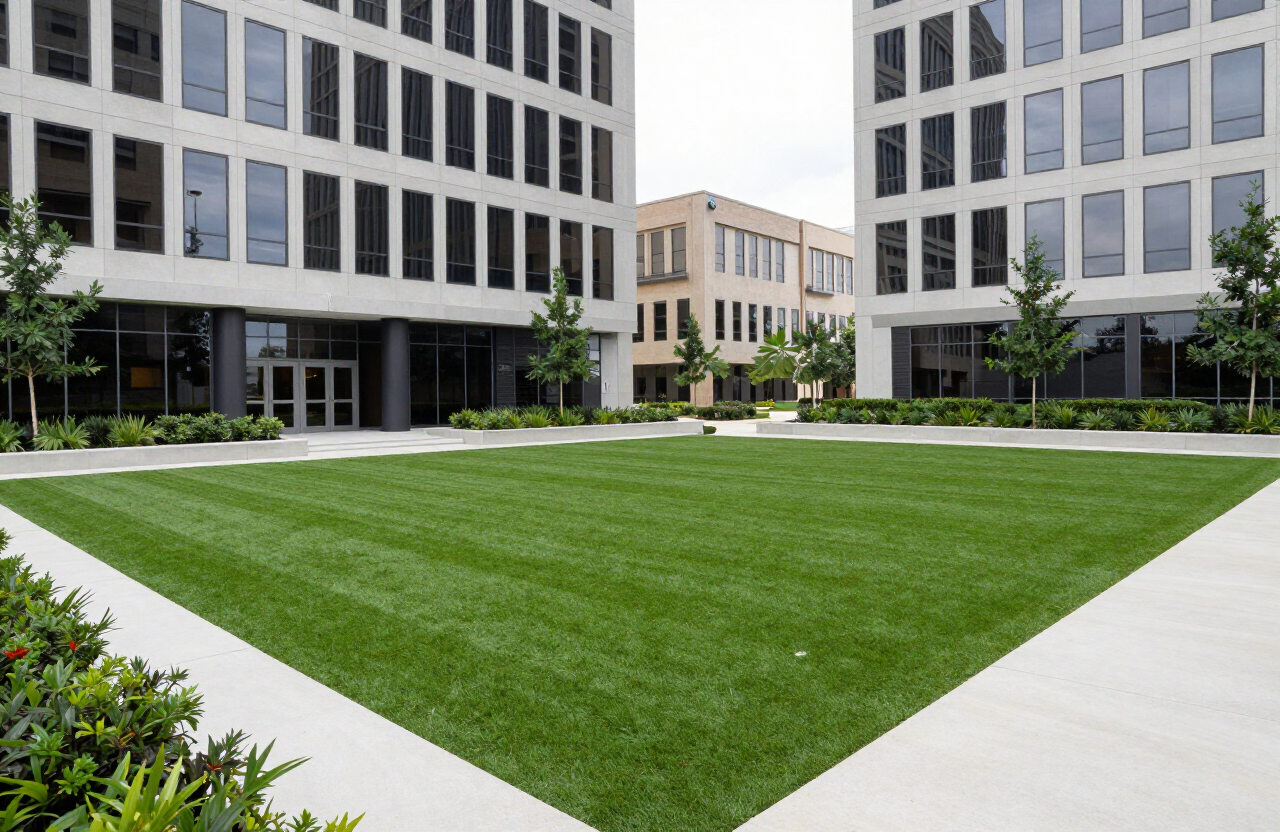
Commercial property type • Daycares & preschools
Surfaces used by young children demand sanitizing, safety-surface care and documented condition reporting — not just a clean-looking lawn.
Daycares and preschools install artificial turf and pour-in-place rubber to deliver soft, accessible, low-maintenance play surfaces for young children. But those same surfaces collect snack spills, bodily fluids, organic debris and heavy daily play traffic — and they sit in the same infill and rubber that children touch, roll on and fall onto every day.
Sanitizing and safety-surface condition matter as much as appearance. Pour-in-place rubber can wear, peel and develop trip edges. Playground equipment collects sticky residue and high-touch contamination. And licensing and parent expectations require documented maintenance, not just a tidy lawn.
SynTurf Care+ scopes daycare and preschool surfaces as a hygiene and safety program: pet-conscious, non-toxic sanitizing for child-facing turf; surface-specific cleaning for pour-in-place rubber; steam cleaning for high-touch playground equipment; and condition reporting that flags wear, trip hazards and repair needs for directors and owners.
Quick scan
Each property type stresses artificial turf and rubber surfacing in predictable ways. Naming the risk shapes the scope before the first visit.
Daily snacks, drinks and bodily fluids collect in play turf infill, feeding bacteria and staining fibers in the Houston heat.
Pour-in-place rubber under swings, slides and high-fall zones wears, peels and develops trip edges that are a child-safety concern.
Playground equipment collects sticky residue and high-touch contamination from many children each day.
Open seams, lifted turf edges and rubber transitions can trip running children. Early repair reporting is a safety priority.
Childcare licensing and parent expectations require evidence of maintained, sanitary play surfaces — documented cleaning supports both.
Organic buildup in infill decomposes in heat, producing odor on play surfaces children and staff use daily.
Commercial surfaces serve residents, guests, children and pets who did not choose the maintenance program. Safety and hygiene drive scope, not appearance alone.
Non-toxic, pet- and child-conscious sanitizing appropriate for surfaces young children touch and roll on, with dry-time planning around the schedule.
Pour-in-place rubber inspected for wear, peeling and trip edges that affect fall protection and child safety.
Steam cleaning of high-touch playground equipment reduces residue and contamination children contact.
Seams, edges and rubber transitions flagged early so repairs stay small and the play surface stays safe.
A commercial assessment walks the property before quoting. These are the items that change scope, scheduling, access and price.
01
Map turf play zones, pour-in-place rubber, splash-adjacent areas and outdoor classrooms separately — each needs different care.
02
Inspect pour-in-place rubber under swings, slides and fall zones for wear, peeling, thinning and trip edges.
03
Identify which playground equipment needs steam cleaning and which high-touch zones are priorities.
04
Confirm service windows — after-hours, weekends, or closed days — so sanitizing dries before children return.
05
Note snack areas, splash zones and high-play corners where buildup concentrates.
06
Confirm who receives condition reports and how repair findings are routed for approval.
A real commercial program is more than a rinse. Scope is built around use pattern, traffic, pet load and the surfaces actually present on the property.
Debris removal, deep cleaning and non-toxic sanitizing for child-facing play turf, with dry-time planning around the schedule.
Surface-specific cleaning of rubber safety surfacing to remove buildup without degrading the wear layer.
Steam cleaning of high-touch playground equipment and surrounding safety surfacing to reduce residue and contamination.
Qualified rubber repair scoped separately, plus a condition report flagging wear, trip edges and turf repair needs.
Commercial buyers need documentation, not promises. These controls keep property managers, boards and facility leads informed at every visit.
Photo report after every visit showing serviced zones, before/after images and products used
Child-safe, non-toxic product selection with dry-time planned around the children’s schedule
Pour-in-place rubber condition documented each visit so wear is caught before it becomes a hazard
Repair and rubber-repair items separated from cleaning and quoted for approval before any work
Service scheduled after-hours, weekends or closed days to avoid disrupting care
Condition reporting supports licensing documentation and parent communication
The details that separate a generic vendor visit from a specialty commercial turf-care program tailored to this property type.
We treat daycare turf and rubber as child-contact surfaces, with sanitizing and product selection matched to young children, not generic grounds care.
Daycare play areas usually combine turf and pour-in-place rubber. We service both in one program instead of splitting vendors.
High-touch playground equipment gets steam cleaning, not just the ground around it — the surfaces children actually grab.
Photo reports and condition findings give directors evidence of maintained, sanitary play surfaces for licensing and parents.
Illustrative situations based on how these properties actually use turf and rubber surfacing — not claimed project results or testimonials.
Preschool playground
A play turf zone collects snack spills and organic debris, with matted fibers in the main play lane from daily traffic.
Typical next step: Deep clean, debris removal, child-safe sanitizing and grooming on a recurring schedule.
Swing zone rubber
Pour-in-place rubber under the swings has thinned and begun to peel at an edge, creating a potential trip and fall concern.
Typical next step: Flag the wear in the condition report and quote a qualified rubber repair separately for approval.
Outdoor classroom
Playground equipment and surrounding surfacing collect sticky residue from many children each day.
Typical next step: Steam cleaning of high-touch equipment plus perimeter surfacing detail, documented in the visit report.
Recurring cadence, between-visit upkeep and early-warning reporting keep commercial surfaces presentable and extend service life.
Recurring cleaning scheduled during after-hours, weekends or school breaks so sanitizing dries before children return.
Daily snack and debris removal by staff reduces buildup and staining between professional visits.
Each visit documents pour-in-place rubber condition so wear and peeling are addressed before they become safety hazards.
Seams, edges and rubber transitions flagged early so repairs stay small and the play surface stays safe.
Gulf Coast heat and humidity, clay soils, Central Texas sun and concentrated pet use shape how commercial synthetic turf ages across our service markets.
Houston-area heat reactivates trapped moisture, bacteria and odor compounds in commercial infill. Surfaces that read clean in the morning can smell stronger by afternoon, especially in pet relief areas and shaded courtyards.
Many Greater Houston commercial sites sit over expansive clay. Settlement and edge movement show up as low spots, open seams, wrinkling and drainage that worked at install but slows later — important to catch before a trip hazard forms.
Austin, San Antonio and Waco sun accelerates fiber fade and makes matted blades look permanently worn even when the pile can still be restored with decompaction, grooming and infill redistribution.
Apartment bark parks, kennels and pet-relief zones across Houston, Austin, San Antonio and Waco concentrate urine in small footprints. Odor control and infill decompaction usually drive scope more than appearance cleaning.
See neighborhood coverage in our service areas directory for Houston metro, Austin, San Antonio and Waco-area communities.
Commercial turf cleaning, repair & rubber surfacing
Full commercial program overview — industries, scope, programs and operations.
Turf Cleaning & Maintenance
Deep power-brushing, sanitizing, deodorizing and grooming for synthetic turf.
Turf Repair & Restoration
Seam, edge, burn, wrinkle, low-spot and drainage repair — separately quoted and approved.
Pet Turf & Odor Treatment
Enzyme-based pet urine odor treatment and infill decompaction.
Playground Turf Cleaning
Turf, rubber surfacing and equipment cleaning for play areas.
Service Areas
Houston, Austin, San Antonio and Waco-area neighborhood coverage.
Straight answers for commercial property managers, boards and facility leads. If your property is different, send photos and we will respond with what we can see.
Yes. We use non-toxic, child- and pet-conscious sanitizing products appropriate for surfaces young children touch. We plan dry time around the schedule so children are not on treated surfaces before product has settled.
Tell us about the property and surfaces. We will walk the site, define scope and send a written proposal — cleaning, odor treatment and repairs are evaluated separately and approved before work.