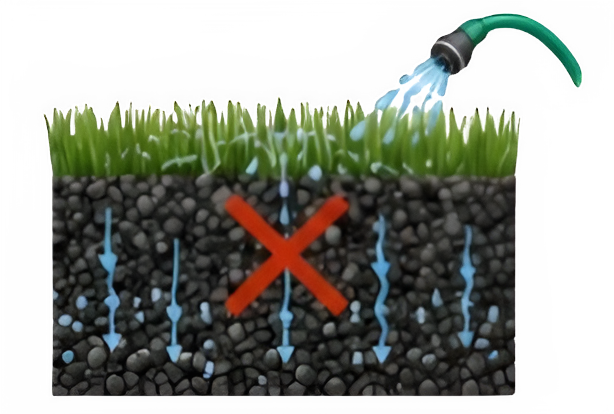
URINE PASSES THROUGH THE TURF FIBERS
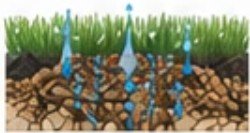
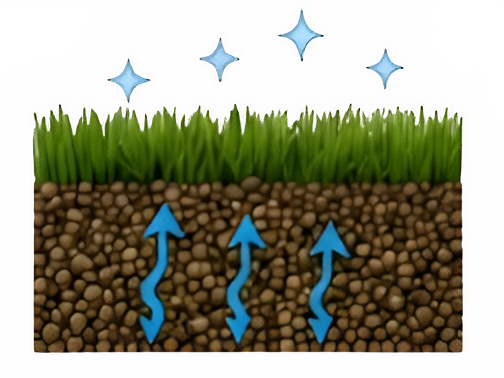
Artificial turf is designed to drain, so liquid can move below the visible blades rather than remaining only on the surface.
RESIDUE CAN REMAIN IN THE INFILL AND SYSTEM
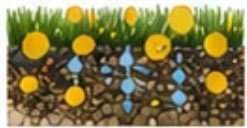
Depending on infill type, drainage, installation and use, urine salts, organic material and residue can remain in the infill, backing, seams, edges or lower layers.
PET WASTE AND DEBRIS ADD ORGANIC BUILDUP
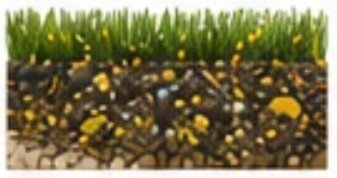
Hair, food, soil, leaves and missed pet waste can contribute to odor and make surface rinsing less effective.
COMPACTED INFILL CAN MAKE CLEANING MORE DIFFICULT
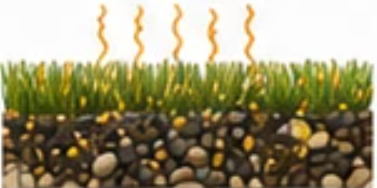
Heavy use can press infill together, limit fluid movement and reduce access to material below the turf fibers.
DRAINAGE OR BASE CONDITIONS CAN CONTRIBUTE
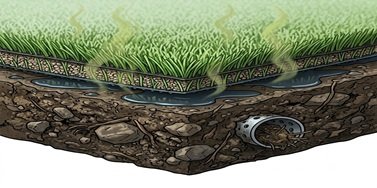
Standing water, insufficient slope, blocked drainage, poor base material or contaminated lower layers can cause odor to return even after the visible surface is cleaned.
THE TAKEAWAY
Recurring pet odor is not always a turf-fiber problem. The odor source may be in the infill, backing, seams, edges, drainage system or base. A proper assessment should identify the likely source before promising a result.
THE ACCURATE POSITION: HOSING ARTIFICIAL TURF
- A hose can dilute and move some surface residue, which may temporarily reduce odor.
- Water alone does not remove pet hair, solids, compacted organic material or all residue held in the infill and lower layers.
- On some systems, a heavy rinse can carry dissolved material farther into infill or base layers without extracting it from the system.
- If drainage is slow or uneven, excess water may remain in the area and odor can return as the turf warms or dries.
- Repeated rinsing cannot correct contaminated infill, poor slope, blocked drainage, base saturation or installation defects.
PET TURF ODOR: MISTAKES TO AVOID
- Covering odor with fragrance without removing debris or treating residue.
- Using bleach, ammonia or household cleaners without confirming turf compatibility and label directions.
- Treating only the visible fibers while leaving compacted infill untouched.
- Adding more infill over contaminated material without first evaluating the odor source.
- Ignoring standing water, blocked drains, low spots, loose edges or saturated base material.
- Promising permanent odor elimination while pets continue to use the same area without recurring maintenance.