Crusted or compacted infill
The surface feels hard underfoot instead of cushioned — infill has packed into a dense crust that traps residue.

Where odor lives · Layer 2
The infill is the storage layer of an artificial turf system — and the place most pet odor actually lives. Until it is opened and treated, rinsing only dilutes what is on top.
Infill is the granular material — silica sand, zeolite, Envirofill, rubber, or a blend — that sits between the turf blades. Its job is to weigh the turf down, stand the fibers upright, and provide cushioning. It is also, by design, a deep porous layer that liquid passes through and deposits into.
When a dog urinates on the turf, most of the liquid flows past the blades and into the infill. As that water evaporates, uric acid, urea, ammonia salts, and organic compounds are left behind on and between the infill particles. Because infill is not rinsed out in normal use, that residue accumulates visit after visit.
This is why the infill layer is the dominant odor source in most pet yards. A hose dilutes the surface and may flush the top fraction of the infill, but it cannot break down the compounds bound to the particles or reach the infill sitting against the backing. Decompaction plus enzyme treatment at the infill level is what actually addresses it.
Infill treatment reduces odor in most yards. Where infill is saturated beyond recovery, replacement in the affected zone is the durable fix and is quoted separately after inspection. We do not promise permanent odor elimination for every installation.
Quick scan
Use this list as a field checklist — not a diagnosis. Multiple issues often stack.
The surface feels hard underfoot instead of cushioned — infill has packed into a dense crust that traps residue.
The yard smells fine right after a rinse, then the smell returns as the infill warms and reactivates trapped residue.
Odor is mild in the morning and noticeably stronger by afternoon when sun warms the infill layer.
A visible dark, flat, or discolored zone marks where pet use has concentrated contamination in the infill.
Water sheets across the surface or ponds instead of moving through — compaction has blocked the drainage path.
The favorite spot has less infill than the surrounding turf as compaction and water movement displace it.
Understanding the driver helps choose cleaning, repair, maintenance — or a larger scope conversation.
As urine water evaporates, uric acid and ammonia salts deposit onto and between infill particles. These compounds are not water-soluble enough to rinse out fully and re-release odor when warmed.
This is the core mechanism behind persistent pet turf odor.
Foot traffic, running, and repeated pet use pack infill into a dense crust. Compacted infill resists drainage and traps residue where a rinse cannot reach it.
Hair, dander, saliva, and decomposing debris collect in the infill and feed bacteria, adding to the odor load beyond urine alone.
Some infill materials compact or hold residue differently. Older infill that has never been decompacted or refreshed holds more contamination than infill under a recurring care plan.
Dogs prefer consistent spots. Repeated use saturates the infill in one zone until it becomes the dominant odor source for the whole yard.
Photos help triage. Some conditions only show after walking the surface, checking drainage, and lifting a corner when appropriate.
01
Check how much infill is present and whether depth is even across the yard or depleted in pet zones.
02
Feel whether the infill is loose and draining or packed into a crust that resists water movement.
03
Locate the specific areas where contamination has concentrated so treatment targets the source.
04
Confirm whether water moves through the infill or sheets across it — compaction and drainage failure look similar from the surface.
05
Decide whether the infill can be recovered with decompaction and treatment or is saturated enough that replacement in the zone is the better answer.
Recommendations depend on condition, use pattern, materials, and access — not a one-size checklist.
Mechanical agitation breaks up the compacted infill crust, lifts matted fibers, and reopens the drainage path so treatment can actually reach the contamination.
Enzyme product is applied into the infill and against the backing — where the odor lives — at correct dilution with real dwell time so it can break down the organic residue rather than being rinsed away immediately.
Where infill is saturated beyond what treatment can recover, extracting and replacing the infill in the affected zone is the durable fix. It is quoted separately after inspection.
Limitation: Only recommended when treatment alone will not hold. We tell you before treating if this is the likely outcome.
Illustrative scenarios based on common property types — not case studies or claimed project results.
Residential
A 900 sq ft dog run develops a hard, crusty surface and persistent odor after a summer of heavy use. Rinsing no longer helps.
Typical next step: Decompact the infill, enzyme-treat at the infill level, and set a recurring plan based on dog count and yard size.
Residential
A single dog uses the same corner of a small yard. That zone is visibly darker and smells strongest while the rest of the turf is fine.
Typical next step: Targeted decompaction and enzyme treatment in the source zone rather than treating the whole yard.
Commercial
A communal relief station over many dogs has infill so saturated that treatment alone will not hold.
Typical next step: Commercial assessment, infill replacement in the relief zone, and a recurring maintenance schedule.
We say so when a patch is not the honest answer. Final scope is always quoted and approved before work.
Often repairable
Decompaction and enzyme treatment restore drainage and reduce odor without replacing material.
May need larger scope
When infill is saturated past what enzyme treatment can recover, replacing it in the affected zone is the durable fix and is quoted separately.
Photos help us triage cause and extent before a truck rolls — wide shot plus close-ups
Cleaning, odor treatment, and repairs are separate workstreams, each quoted and approved
No repair pricing is bundled into a cleaning visit without a separate quote
Kid- and pet-conscious product selection appropriate to the surface and location
Photo documentation of condition when service is completed
Honest language about what a single visit can and cannot resolve
Maintenance does not replace structural fixes, but it reduces how fast issues return.
Regular professional decompaction keeps the infill loose and draining so residue does not accumulate into a crust.
More dogs, smaller yards, and concentrated use need more frequent service. We recommend a frequency after the first visit.
Upright fibers shed water through the infill instead of letting it pool, which helps the infill drain and dry between visits.
Some infill materials are better suited to pet use than others. We can advise on infill options when replacement is on the table.
Heat, humidity, clay soils, and heavy pet use patterns shape how synthetic turf ages across Greater Houston and Central Texas.
Houston-area heat reactivates trapped residue in infill, backing, and base layers. A surface that reads mild in the morning can smell stronger by afternoon as the system warms.
Many Greater Houston yards sit over expansive clay. Base drainage that worked at install can slow over time, holding moisture and residue below the turf and feeding odor upward.
Central Texas UV ages fibers and infill faster, while smaller Austin yards concentrate pet use into a few zones — accelerating contamination in exactly the spots odor lives.
Explore neighborhood pages in our service areas directory for Houston metro and Austin-area coverage.
Pet Turf & Odor Treatment
The full enzyme treatment and infill decompaction service for pet turf.
Pet Odor Removal
Targeted odor removal for residential pet yards.
Persistent Pet Odor (Turf Problem)
Why odor returns after rinsing and how it is evaluated.
Compacted Infill & Flat Fibers
How compaction traps residue and kills drainage.
Poor Drainage
Drainage failure as an odor driver.
Turf Cleaning & Maintenance
Recurring cleaning and grooming programs.
Straight answers. If your situation is different, send photos and we will respond with what we can see.
Infill is a deep porous layer that urine passes through. As the water evaporates, uric acid, ammonia salts, and organic compounds deposit on and between the particles. Those compounds are not fully water-soluble, so rinsing dilutes but does not remove them, and they re-release odor when warmed.
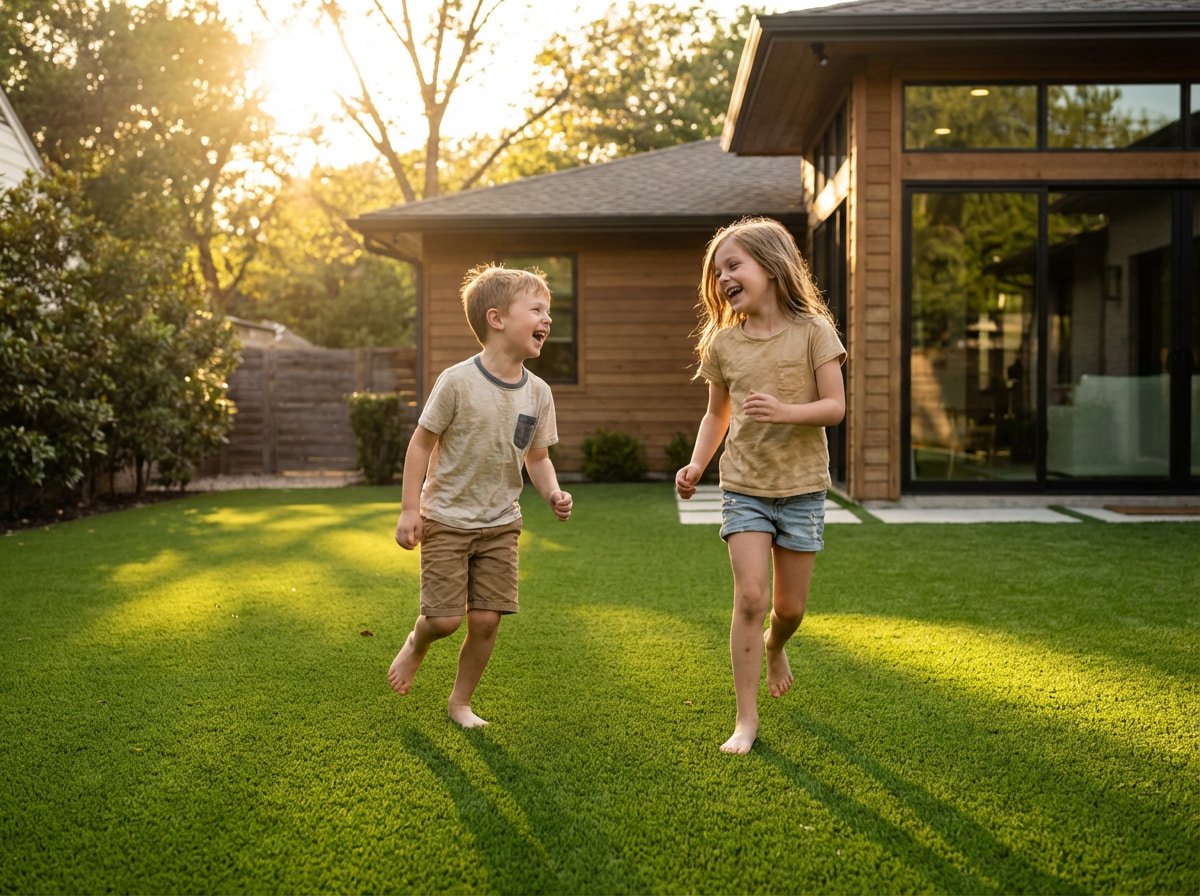
Send photos of the smelly zone and we will tell you whether decompaction and enzyme treatment will hold or whether the infill is saturated enough to need replacement — quoted before any work begins.